Public high yield is now sturdier than investment grade
Public high-yield bonds now look like the sturdier of the two main corporate bond markets. Investment-grade (IG) bonds, the debt of the highest-rated companies, are priced as if they have rarely been safer, just as AI borrowing pours into them. High yield (HY), the lower-rated end, has better borrowers than it did a decade ago, because many of the weakest have left for private credit.
Start with the price. Investors in a corporate bond earn a spread over government debt as payment for the risk of default. In January the spread on US IG bonds fell to its lowest level since 1998, and in late October it was still only 0.88 percentage points. Investors are being paid very little for the risk.
That risk has been growing, mostly because of AI. The handful of tech giants building AI data centres have sold 14% of all IG bonds this year, against an average of 1% from 2010 to 2024. With so much supply, investors have started treating some of it as risky. By August, 4.6% of the US IG market traded at wider spreads than the average BB bond, the top rung of high yield, up from 2.6% a year earlier. Bonds from those tech giants and data-centre projects made up 38% of that group. They still carry IG ratings, but the market already prices them like junk.
The danger is greatest at the bottom of IG, among companies rated BBB. A BBB company cut to BB drops out of IG, and funds that can only hold IG have to sell its bonds into the smaller HY market. Allianz estimates that in a stress like 2020, losses from those downgrades would equal about a third of the IG spread. A third of what investors are paid would go on one kind of loss.
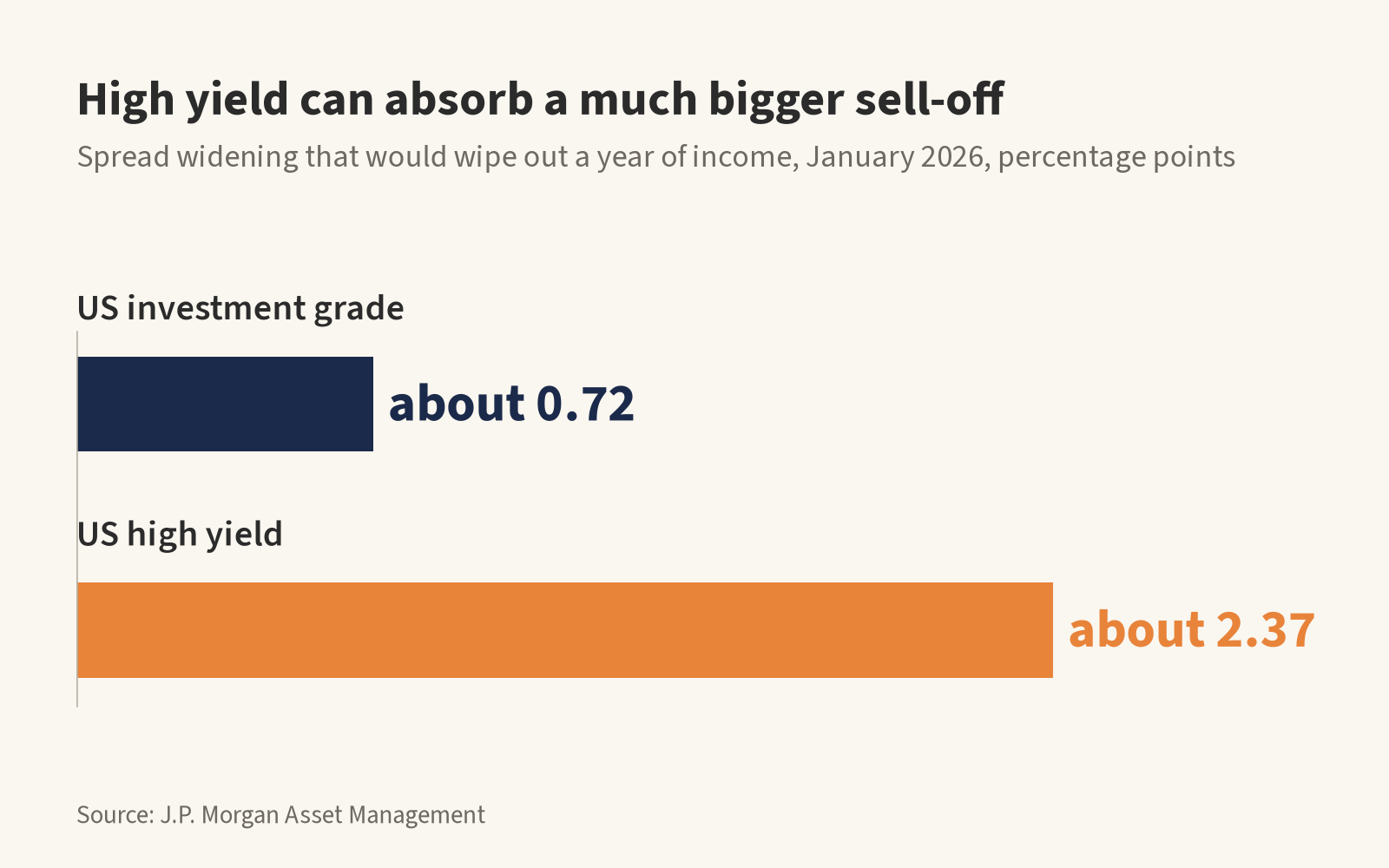
IG also has less room to absorb a sell-off. A bond's interest income offsets some of the price fall when spreads widen, so a useful test is how far spreads can widen before a year's income is gone. In January, J.P. Morgan Asset Management put that at about 0.72 percentage points for US IG and 2.37 for US HY. HY pays more and its bonds are shorter, so it can take more than three times the hit. Spreads have widened that much in past crises, and a move that size would wipe out a year of IG income while leaving HY investors ahead.
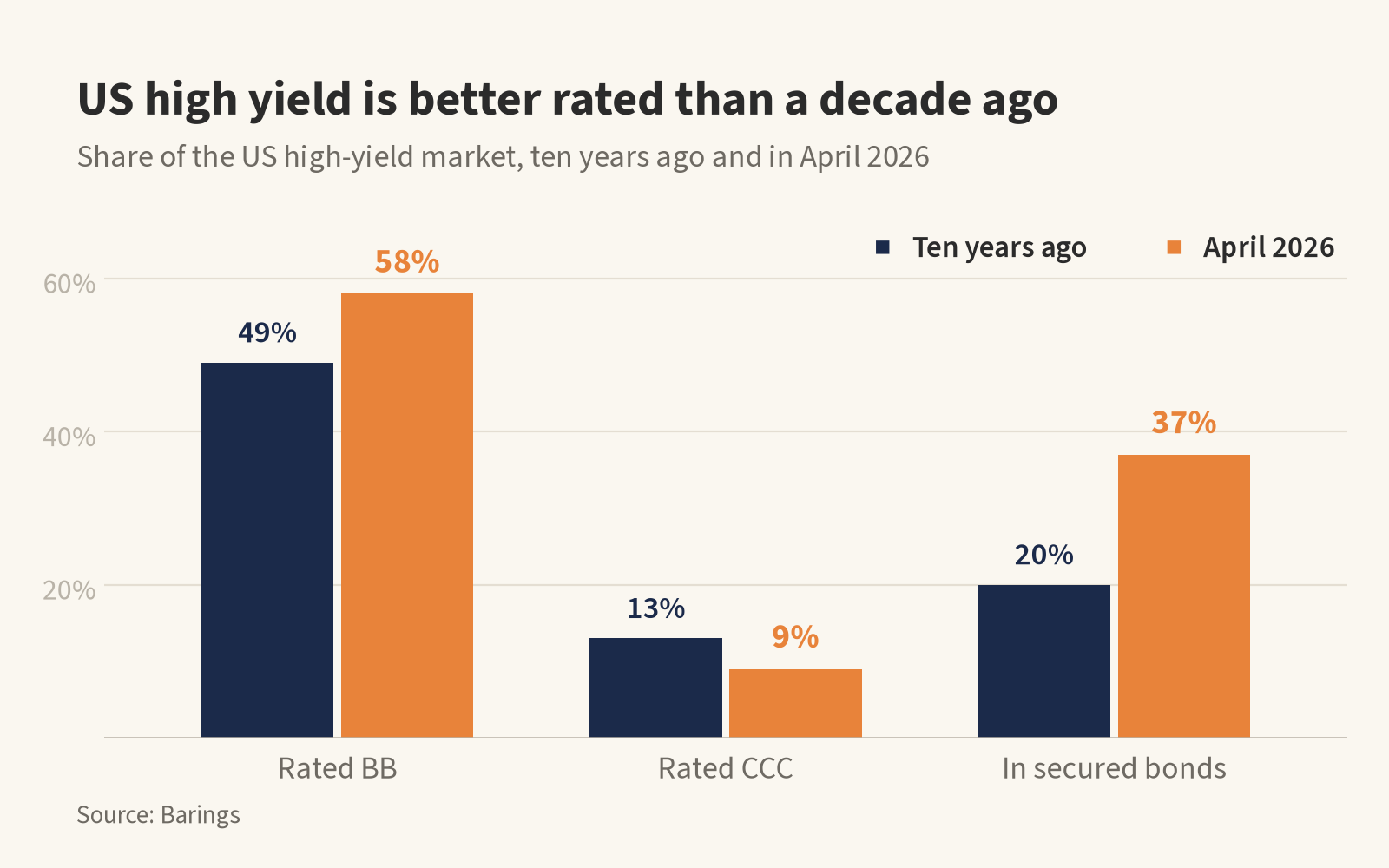
The borrowers in HY have improved too. BB-rated companies make up 58% of the US HY market, against 49% a decade ago, and the share rated CCC, the weakest, fell from 13% to 9%. Bonds backed by specific assets rose from 20% to 37% of the market. In Europe the BB share is about 67%. Fewer weak borrowers means fewer defaults, and the US HY default rate was 2.8% in August.
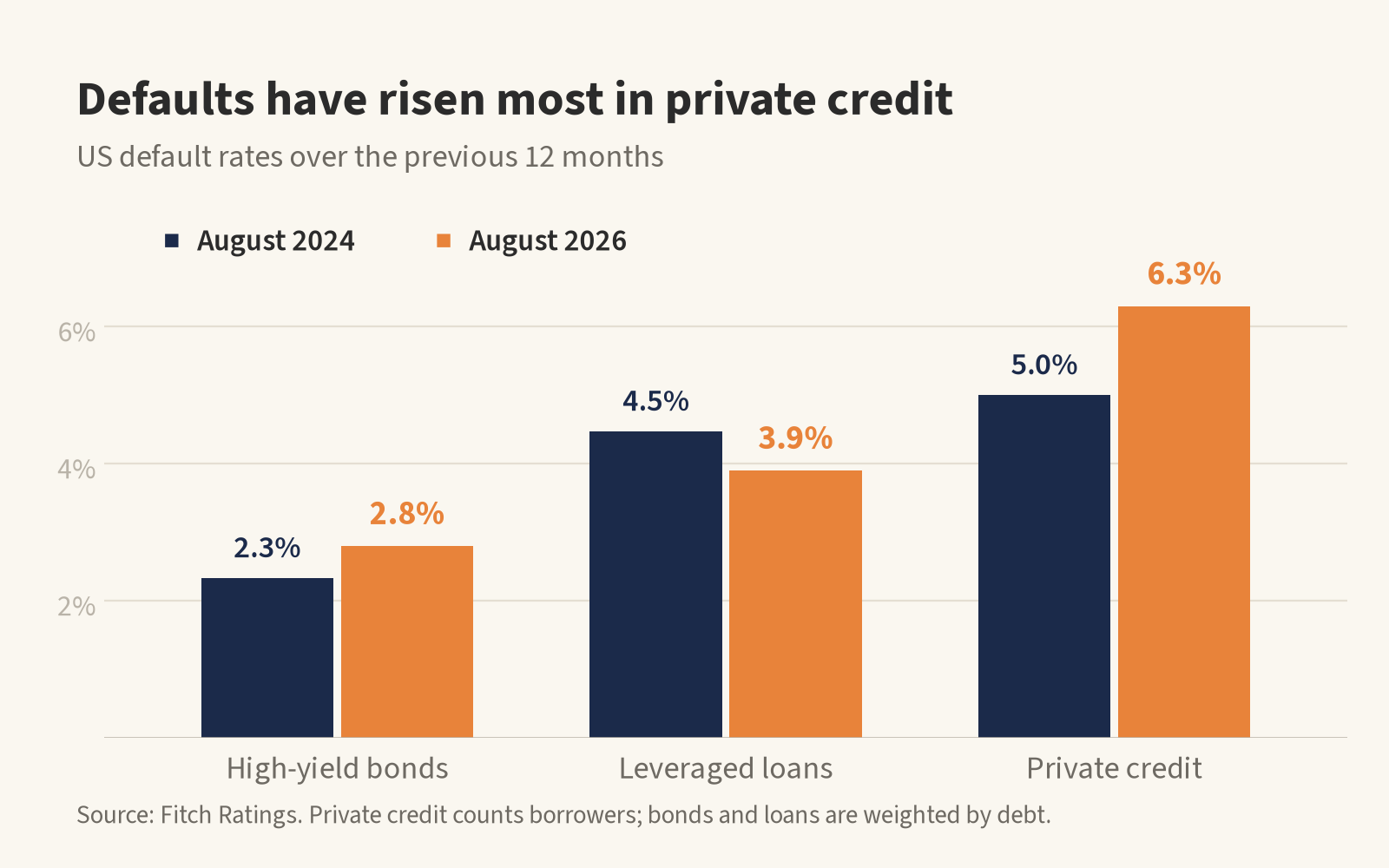
Much of that improvement came from weak borrowers moving out to private credit, where funds lend directly and the loans rarely trade. In 2025, two-thirds of borrowers that switched from bank-arranged loans to private credit were rated B-, just above CCC. Defaults followed them. Fitch's private credit default rate hit a record 6.3% in the year to August, up from 5.0% when it began tracking two years earlier, while the HY rate rose only from 2.3%.
Private credit can also hide stress for longer. Its loans are valued by appraisal rather than by trading, so their prices move slowly while the borrowers weaken. The risk that left public HY is still in the system, in loans few people can see into.
Two things hold the case for HY back. BB spreads reached their tightest since 2005 in August, so investors have already priced in the better quality. And in a sell-off, investors who can't get out of private loans sell what they can, which is public HY. Its spreads could widen even while its own borrowers keep paying.