AI debt has been repriced, and fund savers carry the risk
Lending to the AI build-out has become much more expensive, and the people most exposed are savers in private credit funds. These funds hold loans that last years but promise withdrawals every quarter. A Microsoft default is unlikely. The likelier problem is that those savers wait far longer for their money than they were told.
For about two years, lending to AI looked like an easy trade, because so much of the debt was backed by contracts with Microsoft or Meta. That view has broken down at the riskier end. CoreWeave borrows to buy Nvidia chips and rents out the computing power, and about two-thirds of its revenue last year came from Microsoft. Insuring $1m of its debt against default cost under $40,000 a year ago and $100,000 now, and its bonds yield over 15%. That is the price of a borrower the market thinks could fail.
The contracts don't remove the risk, because the cash comes late. A contract pays only once the data centre is built and switched on, and building it takes more debt. CoreWeave keeps borrowing at whatever rate the market sets until customers start paying. In the second quarter its net interest bill was $640m, up from $267m a year earlier, and it was losing money even before paying it. The chips behind the loans also age quickly. Each new generation from Nvidia cuts what the old ones are worth, long before the debt is repaid.
Investment-grade borrowers are not immune. Banks lent for Oracle's Project Jupiter data centre in New Mexico and then struggled to sell the loans on, and they were quoted at 89 to 91 cents on the dollar. Banks that can't move loans off their books stop making new ones.
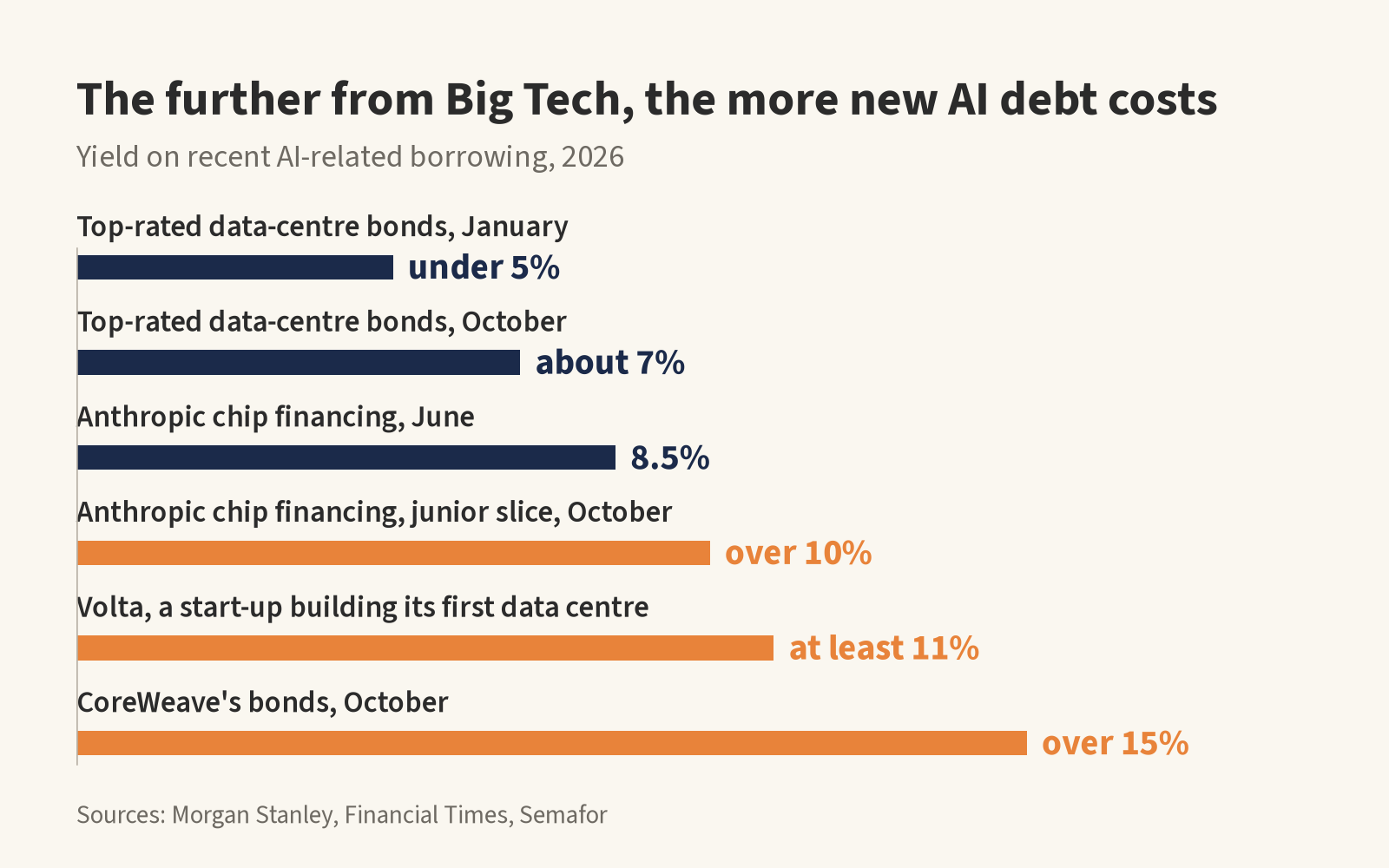
New borrowing costs more across the market, and the further a borrower sits from Big Tech's balance sheet, the more it pays. The safest data-centre bonds yielded under 5% in January and about 7% by October. Anthropic is offering Blackstone more than 10% on the riskiest slice of its latest chip financing, where a similar deal four months earlier paid 8.5%.
With banks pulling back, more of this lending falls to private credit funds. Morgan Stanley expects around $700bn of data-centre spending over 2026 to 2028 to be financed that way. When banks can't sell the loans, the funds still willing to lend set the price.
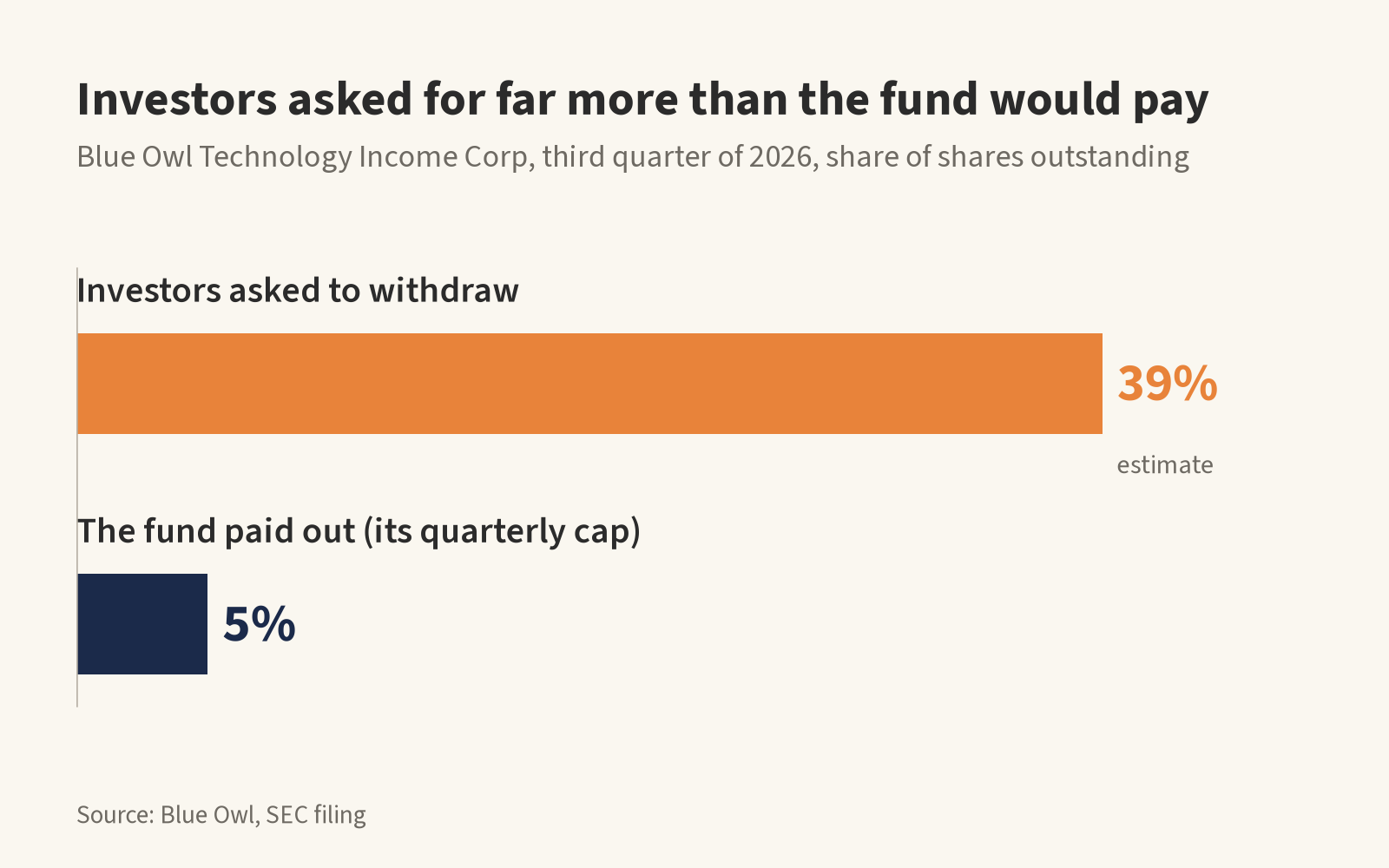
A growing share of private credit money comes from wealthy individuals. They invest through funds that hold loans for years but let investors withdraw each quarter, up to a cap. That promise is already under strain. At Blue Owl's technology lending fund, investors asked to take out an estimated 39% of the shares in the third quarter. The fund paid out its cap of 5%. Requests that go unmet don't carry over, so investors have to queue again next quarter. Blue Owl says it can pay without selling a single loan, but the rest of the money stays in the fund.
The repricing reaches these funds through their valuations. Most private loans never trade, so funds value them against similar debt that does. With an Oracle-linked loan near 90 cents and CoreWeave's bonds above 15%, it gets harder to keep similar AI loans marked at full value. A lower mark means a lower fund value, and investors who expect one have a reason to ask for their money early. Fewer new investors also leaves less cash for the next AI deal.
Big Tech can afford the higher rates, and most deals will still get done. What has changed is who waits. These funds were sold to savers as steady income with quarterly access, and at Blue Owl most of the money they asked for in the third quarter is still in the fund.