A gilt now pays about what tech earns
A 10-year gilt now yields about 5.3%. That is about what the US technology sector is expected to earn on its share price, an earnings yield of about 5.1%. The gilt pays its yield in cash. Tech earnings are only partly paid out, and a growing share of them is going into data centres instead of to shareholders.
The gilt yield has come down a little from its peak. On 8 October the 10-year reached 5.527%, its highest since July 2007, and the 30-year hit its highest since 1998. Since then long gilts have rallied and short gilts haven't. On the Bank of England's fitted yield curves, long yields fell over the next three weeks while the 2-year yield rose to its highest this year. Someone who bought a 2056 gilt at the peak was up almost 5% by 28 October. A 2-year gilt bought the same day made close to nothing.
Short gilts follow Bank Rate, which is 3.75%, and traders now expect it to go a lot higher. Swap markets price Bank Rate at about 5% by the end of 2027, slightly more than at the gilt peak. In February the same contracts were pricing cuts.
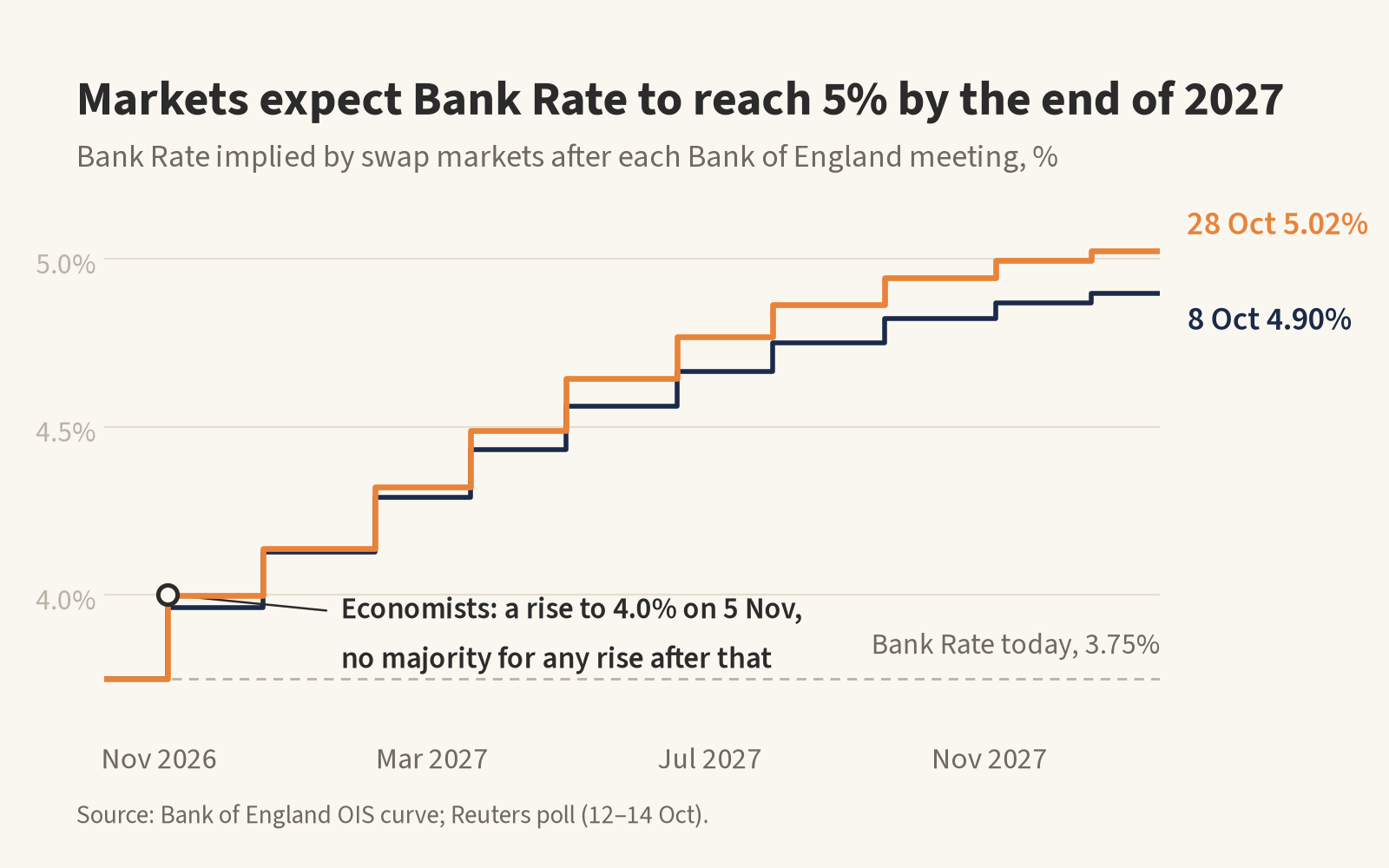
Economists see far less. Most of those in a Reuters poll expect one rise to 4.0% at the Bank's 5 November meeting, and no majority expects any rise after that. Huw Pill, the Bank's chief economist, has voted for a rise at every meeting since April, and even he said he was "a little bit more sceptical" that four rises would be needed. If the economists are right, short gilt yields have the most room to fall.
Oil is what keeps traders from betting that way. UK inflation rose to 3.5% in September, mostly because of fuel, and Brent crude was higher at the end of October than at the gilt peak. While oil keeps climbing, betting against more rate rises is expensive.
With oil up and more rises priced, most of the rally in long gilts came from the US. The 10-year US Treasury yield fell further than the 10-year gilt over the same weeks, and the UK added a cut in long gilt sales to the smallest share of issuance since 1990/91.
US tech shares fell in the same weeks, but by less than the coverage suggests. On Nasdaq's closing data the Nasdaq-100 was 5.8% below its 6 October record on 29 October and still up for the year. Its fall in March was about twice as deep. The real damage is in a handful of companies.
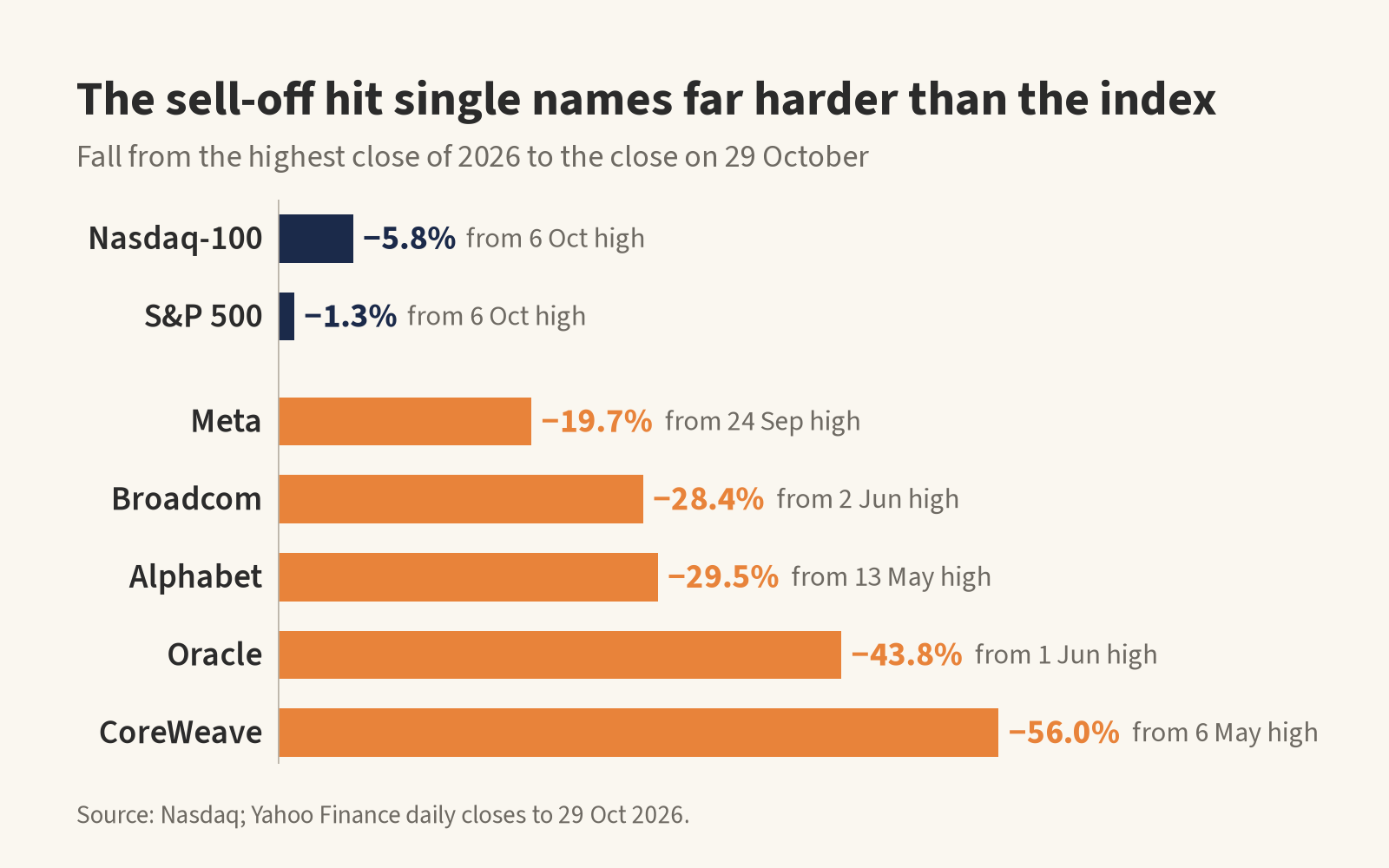
Those companies are spending on AI data centres faster than their businesses bring in cash. Alphabet spent 121% of its operating cash flow on investment, against 68% at Microsoft, and its shares had their worst day on record on 29 October. Meta reported negative free cash flow for the third quarter, and Amazon, which has burned through cash over the past year, says it will spend "meaningfully more" next year.
The market treated restraint very differently. Oracle rose 11% after it put a ceiling on its financing. Microsoft, which still produces plenty of free cash, was rewarded too.
Across the sector, though, valuations look cheap. FactSet puts the S&P 500 technology sector on a forward P/E of 19.6, against a five-year average of 25.5. Most of that drop came from analysts raising their earnings forecasts, with prices barely moving. If the forecasts come down, the multiple goes straight back up.
That P/E is where the 5.1% earnings yield comes from, just under the gilt. The difference is in what reaches the investor. The gilt pays its yield in cash as long as the government pays as promised. A tech share's 5.1% is mostly earnings on paper. Only a small part comes back as dividends, and at the biggest spenders much of the rest is going into data centres that still have to pay off.
On these numbers I'd call buying the whole tech sector after a 6% fall a weak trade. The index price still depends on AI spending working out, and a gilt pays about the same yield without that bet. Companies whose earnings arrive as free cash flow are the stronger case, and the market has already started to price them apart from the heavy spenders.